
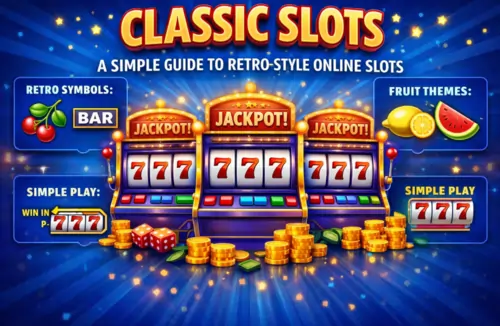
Classic slots are the backbone of casino gaming, both online and on the floor. This guide explains what classic slots are, how they differ from modern video slots, and when they make sense for different types of players. If you’re completely new to slots, start with our beginner’s online slots guide before diving into specific game types.
What Are Classic Slots?
Classic slots are inspired by traditional fruit machines and early mechanical slot machines. They focus on simple gameplay instead of complex features.
- Usually 3 reels, sometimes with 1–5 paylines.
- Symbols often include fruits, bars, bells, sevens, and simple wilds.
- Few or no bonus games; the core experience is spinning and matching symbols.
Think of classic slots as the “retro mode” of slot gaming: straightforward, fast, and easy to understand. For more detail on how these games evolved from mechanical machines, you can read this neutral overview of the history of slot machines.
Classic Slots vs Video Slots
Modern video slots can feel overwhelming for new players. Classic slots strip everything back to basics.
| Feature | Classic slots | Video slots |
|---|---|---|
| Reels | Usually 3 | Usually 5+ |
| Paylines | 1–5 | 10 to hundreds or more |
| Graphics | Simple, retro | Modern, animated, themed |
| Features | Few, sometimes just wilds | Free spins, multipliers, bonus games |
| Volatility | Often low–medium | Ranges from low to very high |
| Learning curve | Very easy | Can be complex |
If your readers want to compare slots with more advanced games, you can link them to your video slots guide from this section.
Key Features of Slots
Even though classic slots are simple, they still have a few common features worth knowing.
- Simple wild symbols: Often just substitute for other symbols to complete a winning line.
- Multipliers: Some classic games add 2x or 3x multipliers to specific wilds or combos.
- Single or few paylines: Usually straight across the middle, sometimes additional lines above or below.
- Straightforward paytables: You can usually see all prizes on one screen.
Some “classic-style” online slots add a light bonus twist (like a small respin or a simple pick feature) without losing the old-school feel.
RTP and Volatility in Classic Slots
Classic slots can be good value if you pick the right ones.
- Many classic slots offer solid RTP, often around 96% (but always check the info screen).
- Volatility is often low to medium, which means more frequent smaller wins.
- Because there are fewer features and no big jackpot structure in many classics, more of the return can go into regular line wins.
For readers who want to dig into the math, link to your High RTP Slots guide where you explain Return to Player and volatility in more depth (internal link).
Who Are Classic Slots Best For?
Classic slots are great for:
- Beginners: New players who want to learn the basics of paylines, wins, and symbols without complex features.
- Budget players: People who want to stretch a small bankroll with frequent small hits.
- Nostalgic players: Anyone who enjoyed old fruit machines or brick-and-mortar casino floors.
- Bonus wagering: Simple classic slots with good RTP can help clear wagering without huge swings.
They are less ideal if you only care about huge bonus rounds, elaborate storylines, or massive jackpots. If someone wants those instead, point them to your progressive jackpot slots guide.
How to Read a Slot Paytable
A good guide should teach players how to read the paytable.
Tell your readers to:
- Open the paytable or info menu before spinning.
- Look for:
- Symbol values (how much 3-of-a-kind pays)
- Any wild symbols and how they work
- The RTP percentage (if shown)
- Check whether betting higher unlocks extra paylines or higher payouts on specific combos.
You can connect this section with your broader slot RTP and volatility explained article so players understand how paytables and RTP work together (internal link).
Simple Strategy Tips for Slots
You can’t beat the house edge, but you can play classic slots more smartly.
- Set a budget before you start
Decide how much you’re comfortable losing in one session and stick to it. - Choose your stake for longer sessions
- Aim for at least 100–200 spins in your budget so you can enjoy the game.
- Smaller stakes = more time playing and more chances to hit line wins.
- Check RTP and volatility
If RTP is visible, prefer games with higher percentages and suitable volatility (often low or medium for classic slots). - Avoid chasing losses
Classic slots spin fast. Take breaks and don’t raise your bet just to “win it back.” - Use them for learning
Classic slots are the perfect place to learn how lines, symbols, and payouts work before moving to more complex games.
You can support this section with an internal link to your bankroll management guide.
Classic Slots vs Other Slot Types
To help readers position classic slots within your overall guide category, briefly compare them to other slot types you cover:
- Classic slots: Simple, 3 reels, easy gameplay.
- High RTP slots: Focus on value and long-term return (may be classic or video).
- Progressive jackpot slots: Lower hit rates but the chance of huge top prizes.
- Video slots / Megaways: Feature-rich, many ways to win, higher volatility options.
From here, you can link out to your main slot game types hub where you group all your slot guides in one place (internal link).
Responsible Gambling with Classic Slots
Even simple games can be risky if you lose track of time or money.
Remind readers to:
- Treat classic slots as entertainment, not a way to make money.
- Take breaks, especially if they’re spinning quickly on auto-play.
- Use limits (deposit, loss, time) when the casino offers them.
- Step away and seek help if gambling stops being fun or starts to feel like stress or pressure.
Once you publish a dedicated responsible gambling guide, link it here so players can find local helplines and practical tools (internal link).
