

High RTP slots are a favourite for players who care more about long‑term value than flashy jackpots. This guide explains what “high RTP” really means, how to find these games, and how to use them in a smart bankroll strategy. For a basic introduction to slot mechanics, see our beginner’s online slots guide (internal link).
What Is RTP in Slots?
RTP stands for Return to Player. It’s a theoretical percentage that shows how much a slot is expected to pay back to players over a very long period. If you want a more technical explanation of RTP and house edge, the UK Gambling Commission has a clear overview.
- Example: A slot with 97% RTP is expected to return 97 credits for every 100 credits wagered in the long run.
- RTP is calculated over millions of spins, not a single session.
- You can still win or lose heavily in the short term, but higher RTP usually means better value over time.
For a deeper breakdown of how RTP is calculated and why casinos choose different configurations, you can also point readers to your dedicated slot RTP and volatility guide.
Why High RTP Slots Matter
Choosing high RTP slots doesn’t guarantee profit, but it does improve your theoretical returns.
- More of your total stake is returned as wins over time compared to lower RTP games.
- You may enjoy longer sessions on the same bankroll.
- High RTP games are popular with more experienced or value‑focused players.
However, RTP doesn’t tell the whole story—volatility, hit frequency, and features also affect how a slot feels. You can link here to a piece comparing high RTP vs progressive jackpot slots (internal link) so players understand the trade‑off between value and huge top prizes.
RTP vs Volatility vs Hit Frequency
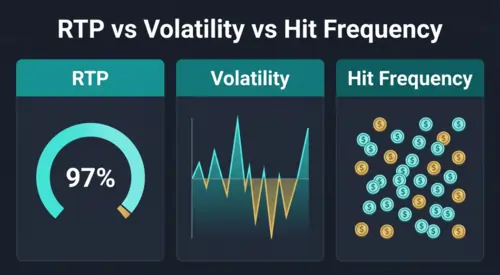
To choose the right games, you need to understand how RTP interacts with volatility and hit frequency.
- RTP: Long‑term payback percentage.
- Volatility: How swingy the game is.
- High volatility = fewer but bigger wins.
- Low volatility = more frequent but smaller wins.
- Hit frequency: How often any win (even tiny) occurs.
A slot can be high RTP but also high volatility. That means:
- Good value over the long run.
- But you might still experience long dry spells before big hits land.
For smoother sessions, look for high RTP combined with medium or low volatility. Remind readers they can always revisit your slot RTP and volatility guide for more examples (internal link).
What Counts as a High RTP Slot?
Here’s a simple way to think about it:
- 95% or lower – Low RTP (poor value unless compensated by other features like huge jackpots).
- Around 96% – Standard modern online slot RTP.
- 97–99% – High RTP and especially attractive for value‑focused players.
Some classic or simple video slots reach 98–99% RTP, while many branded or heavily featured games sit closer to 95–96%.
How to Find High RTP Slots at Online Casinos
Most players miss out on high RTP slots simply because they don’t know where to look.
- Check the game info or paytable
- Open the “info”, “paytable” or “help” menu inside the slot.
- Many games list RTP and volatility in a dedicated section.
- Use the casino’s filters (if available)
- Some casinos let you filter by “high RTP” or show recommended “hot” games.
- If there’s no filter, look for a “game info” or “more details” button on the lobby tile.
- Look up RTP on the provider’s site
- Big providers often publish RTP values for each title.
- Note: Some games offer different RTP versions (e.g. 96%, 94%, 92%). The casino chooses which one to host, so always confirm inside the game.
- Avoid mystery RTP games
- If a casino refuses to show RTP or hides key information, that’s a red flag.
- Prefer transparent brands that clearly display game data. You can direct readers to your online casino reviews for brands that clearly publish RTP (internal link).
Typical Features of High RTP Slots
High RTP slots don’t always have the flashiest graphics, but they tend to share some common traits:
- Simpler mechanics and fewer gimmicks.
- Fairly straightforward bonus rounds (free spins, multipliers, expanding wilds).
- Lower “jackpot dream” but stronger day‑to‑day value.
They’re ideal if you’d rather grind steady sessions instead of chasing rare, huge wins.
Example Use Cases: When to Choose High RTP Slots
High RTP slots are especially useful if:
- You’re wagering a bonus and want to minimise expected loss.
- You play regularly and care about long‑term value.
- You prefer longer sessions on a fixed budget.
- You enjoy strategy‑style play, like adjusting bet sizes and testing different game types.
For short, high‑risk “jackpot hunts”, high RTP is less important than jackpot structure and volatility. Link here to your progressive jackpot slots guide so readers can compare styles (internal link).
Bankroll Strategy for High RTP Slots
Even with a high RTP, you still need good bankroll management.
- Set a clear session budget
Decide how much you’re willing to risk per session or per day. Once it’s gone, you stop—win or lose. - Choose stakes that fit your roll
- A simple rule: aim for at least 100–200 bets in your bankroll.
- Example: If you have 50 units, betting 0.20–0.50 per spin gives you room for variance.
- Prefer medium volatility for longer sessions
High RTP + medium volatility often gives a nice balance of entertainment and value. - Don’t chase losses
High RTP doesn’t “owe” you anything in the short run. If you hit your stop‑loss, walk away. - Use win goals and cash‑out rules
- Example: If you double your session bankroll, consider cashing out at least part of it.
- This keeps sessions satisfying even when variance goes your way.
You can support this section with a link to a dedicated bankroll management guide (internal link) for more concrete examples and charts.
Common Myths About High RTP Slots
“High RTP means I’ll win more often”
Not necessarily. RTP is about total value over time, not how often you hit wins. Volatility and hit frequency control how “busy” the game feels.
“If I play long enough, I’ll always end up at the RTP”
In reality:
- RTP is calculated over millions of spins.
- Your personal sessions will almost always sit above or below the stated RTP.
- Short‑term luck still plays a huge role.
“High RTP slots are rigged in favour of skilled players”
Slots are games of chance. There’s no skill in changing outcomes, only smarter game and stake selection.
How to Build a High RTP Slot Session
Here’s a simple example structure for a value‑focused session:
- Pick 2–3 high RTP slots you enjoy.
- Check each game’s volatility and minimum bet.
- Decide your total budget and split it across your chosen games.
- Set a time limit (e.g. 45–60 minutes).
- Stick to your stop‑loss and a realistic win goal.
This approach keeps things controlled but still gives you variety and entertainment.
Responsible Gambling with High RTP Slots
High RTP is not a shortcut to guaranteed profit. It only improves your expected return, and gambling should always be treated as paid entertainment.
- Never gamble with money you can’t afford to lose.
- Take regular breaks to check how you feel and how much time you’ve spent.
- Use tools like deposit limits, loss limits, and time‑outs if the casino offers them.
- If gambling stops being fun or starts to feel like pressure, step away and seek help if needed.
If you later write a dedicated responsible gambling guide, you can link it here (internal link) to give players local helplines and tools.
Final Thoughts
High RTP slots are an excellent choice for players who want better long‑term value and longer sessions from the same bankroll. They won’t remove the house edge, but they reduce it—and when combined with good bankroll management and responsible play, they fit perfectly into a “smart gambling” approach.
