

Roulette is one of the most iconic casino games, known for its spinning wheel, bouncing ball, and simple yet exciting betting options. It’s easy to understand, offers a wide variety of bets, and lets players choose between safer wagers and high‑risk, high‑reward shots.
The basic idea is simple: you place bets on where you think the ball will land on the roulette wheel. Once the wheel spins and the ball settles into a numbered pocket, winning bets are paid according to the odds, and losing bets are collected by the house.
If you want to explore other classic titles alongside roulette, you can also check out our full collection of casino games and table games.
Roulette Wheel and Table Layout
A standard roulette setup includes:
- A wheel with numbered pockets.
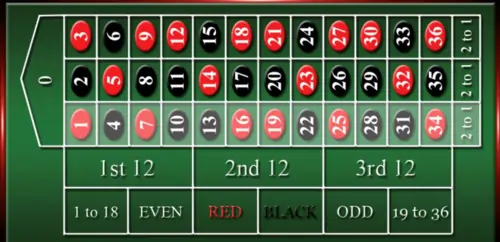
- A table layout where players place their chips on numbers and bet types.
European vs American Roulette
There are two main versions of roulette you’ll see in casinos and online:
- European Roulette
- Numbers 1–36 and a single green 0.
- House edge around 2.7%.
- American Roulette
- Numbers 1–36, a single green 0, and a green 00.
- Higher house edge (around 5.26%) because of the extra 00 pocket.
For beginners, European (or single‑zero) roulette is generally a better choice because the lower house edge means your bankroll lasts longer.
How to Play Roulette (Step by Step)
Learning to play roulette is straightforward:
- Choose Your Table and Stakes
Pick a roulette table (ideally European/single‑zero) that matches your budget and minimum bet requirements. - Buy In and Get Chips
At a physical casino, you’ll get special roulette chips in a unique color so your bets aren’t mixed with other players’. Online, you’ll use your regular balance with digital chips. - Place Your Bets
Before the wheel spins, place your chips on the table layout to represent the numbers or bet types you want to back. You can place multiple bets in the same round. - No More Bets
When the dealer (or software) calls “no more bets”, you must stop placing or changing bets. The wheel spins and the ball is released. - Ball Lands and Results Are Announced
When the ball lands in a numbered pocket, the dealer announces the winning number and color. Winning bets are paid; losing bets are removed from the table. - Next Round
You can place new bets for the next spin, adjust your strategy, or cash out.
Types of Roulette Bets
Roulette bets are usually divided into inside bets and outside bets. Inside bets focus on specific numbers; outside bets cover larger groups of numbers.
Inside Bets (Higher Risk, Higher Payouts)
These bets are placed on the numbered grid in the center of the layout:
- Straight Up
- Bet on a single number (0–36).
- Highest payout, but lowest chance of hitting.
- Split
- Bet on two adjacent numbers (e.g., 17/20) by placing your chip on the line between them.
- Street
- Bet on a row of three numbers (e.g., 1–2–3) by placing your chip at the edge of the row.
- Corner (Square)
- Bet on four numbers that meet at a corner (e.g., 13–14–16–17).
- Line (Six Line)
- Bet on two adjacent streets (six numbers total).
Inside bets can deliver big wins, but they’re more volatile and better suited for players comfortable with higher risk.
Outside Bets (Lower Risk, Lower Payouts)
Outside bets sit around the outside of the number grid and cover larger sections of the wheel:
- Red or Black
- Bet on the color of the winning number.
- Odd or Even
- Bet on whether the winning number will be odd or even.
- Low or High (1–18 / 19–36)
- Bet on whether the winning number will fall in the low or high range.
- Dozens (1–12, 13–24, 25–36)
- Bet on which group of 12 numbers will win.
- Columns
- Bet on one of the three vertical columns of 12 numbers.
Outside bets don’t pay as much as inside bets, but they win more often, making them attractive for beginners and more cautious players.
Payouts and Odds (Simple Overview)
Exact payout tables vary slightly by game version, but the basic structure is:
- Straight Up: highest payout, lowest probability.
- Split, Street, Corner, Line: payouts decrease as you cover more numbers.
- Outside bets like Red/Black or Odd/Even: near 50/50 outcomes, but the zero (and double zero in American) keeps the house edge in place.
The key thing to remember: no bet in roulette can remove the house edge. Different bets simply change your variance (how swingy your bankroll feels), not the long‑term advantage of the casino.
House Edge and Why Game Choice Matters
The house edge in roulette comes from the green pockets (0 and 00) and how payouts are structured. Even on “almost even” bets like Red/Black or Odd/Even, the casino keeps a small advantage because the green pockets are neither red nor black, neither odd nor even.
- European (single‑zero) roulette: about 2.7% house edge.
- American (double‑zero) roulette: about 5.26% house edge.
As a beginner, choosing single‑zero roulette is one of the simplest and most effective “strategy” decisions you can make.
Basic Roulette Strategy Tips for Beginners
Roulette is largely a game of chance, and no system can overcome the built‑in house edge over the long term. However, you can make smarter choices about how you play.
1. Choose the Right Version
- Prefer European or single‑zero tables over American double‑zero whenever possible.
- Avoid special side bets or rule variations that increase the house edge unless you fully understand them.
2. Start with Simple Outside Bets
For a more stable experience, beginners can:
- Focus on Red/Black, Odd/Even, and Low/High bets.
- Mix in a few Dozens or Columns bets if you want more variety without going too deep into high‑risk territory.
3. Manage Your Bankroll
- Set a strict budget before you start playing and stick to it.
- Consider using smaller, consistent bet sizes rather than jumping between minimum and maximum bets.
- Decide in advance when you’ll walk away—both for losses and for wins.
4. Be Wary of Betting Systems
Popular betting systems (like Martingale, where you double your bet after each loss) can make sessions more exciting, but they do not change the house edge. They also can lead to large losses quickly if you hit a losing streak or reach table limits.
Use these systems only if you understand the risk and treat them as entertainment, not as a way to “beat” roulette.
Common Roulette Mistakes to Avoid
Beginners often fall into repeated traps that can drain their bankroll faster:
- Chasing Losses
Increasing bet sizes aggressively after a losing run in an attempt to get back to even. - Believing in “Due” Numbers
Assuming that a number or color must appear soon because it hasn’t hit for a while. Each spin is independent; past results don’t change the odds. - Ignoring the House Edge
Treating American and European roulette as the same, when the extra 00 in American significantly increases the house edge. - Overcommitting to Complex Systems
Relying on betting systems or number “patterns” instead of recognizing roulette as a game of chance. - Not Setting Limits
Playing without a time limit, loss limit, or win target can lead to emotional decisions and overspending.
Roulette: Luck vs “Strategy”
Roulette is much more luck‑driven than games like blackjack. You can’t influence where the ball lands or change the odds with decisions in the same way you can with card strategy.
However, there is still some room for smarter play:
- Luck
- Every spin is random and independent.
- Short‑term results can be wildly up or down.
- Smart Play (Practical Strategy)
- Choosing low‑edge versions (European vs American).
- Selecting bet types that match your risk tolerance.
- Managing your bankroll and knowing when to stop.
Think of roulette as entertainment with a known house advantage, not as a system to crack or a reliable way to generate profit.
Final Thoughts
Roulette is a classic casino game that combines simple rules with a wide range of betting options. It’s easy for beginners to learn and can be as relaxed or as high‑energy as you want, depending on the bets you choose.
By understanding the difference between European and American roulette, learning the basic bet types, and managing your bankroll carefully, you can enjoy roulette while keeping your experience under control. If you’re ready to explore more, you can next look at strategy‑focused pieces that explain betting approaches, risk levels, and how roulette fits into an overall casino session plan.
If you enjoy roulette, you might also want to explore other casino games and table games available at 18ClubSG Blog.
