

Roulette looks complicated at first, but the game is actually very simple: you bet on where a small ball will land on a spinning wheel. Once you understand the wheel, the betting layout, and the difference between “inside” and “outside” bets, you can sit at any roulette table—online or live—and play with confidence.
This guide explains how to play roulette, main bet types, payouts, and simple tips for managing risk and enjoying roulette without confusion.
If you’re still learning the basics of online casino play, you might also like our How to Play Casino Games Online beginner guide to playing casino games online, which covers safe casinos, bonuses and bankroll tips before you dive into roulette, blackjack or slots.
Roulette Basics: Wheel and Table Layout
Roulette is played with:
- A wheel divided into numbered pockets.
- A small ball spun around the wheel.
- A betting layout on the table where players place chips.
European vs American roulette
There are two common versions:
- European roulette
- 37 pockets: numbers 1–36 plus a single 0.
- Lower house edge; better for players.
- American roulette
- 38 pockets: numbers 1–36 plus 0 and 00.
- Higher house edge because of the extra 00 pocket.
If you can choose, European roulette is usually the smarter option.
If you want a deeper breakdown of wheel layouts, odds and house edge, you can also check an independent guide like this encyclopedia article on roulette rules and odds. It reinforces why European roulette is usually the smarter choice for players.
Table layout
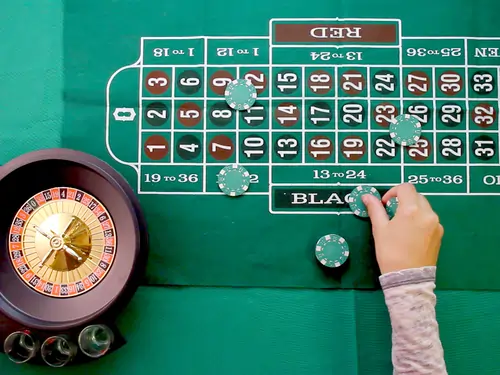
The table has:
- The main grid with numbers 1–36 arranged in rows and columns.
- A green area for 0 (and 00 on American tables).
- Betting areas around the grid for outside bets like red/black, odd/even, and dozens.
You place chips on these areas to indicate your bets before each spin.
How a Round of Roulette Works
A typical round follows this sequence:
- The dealer (or the system online) announces that you can place your bets.
- Players place chips on the layout: numbers, colors, groups, etc.
- The dealer spins the wheel in one direction and rolls the ball in the opposite direction.
- The dealer calls “No more bets,” and you can’t change anything.
- The ball slows down and lands in a numbered pocket.
- The dealer marks the winning number, pays out winning bets, and collects losing chips.
- A new round begins, and you can bet again.
Your goal is simply to predict the number or type of pocket where the ball will land.
Outside Bets: Best for Beginners
Outside bets sit around the outside of the main number grid. They are simple to understand and cover larger groups of numbers, so they win more often but pay less.
Even‑money outside bets (pay 1:1)
These are closest to “almost 50/50” outcomes (minus the house zero):
- Red or Black
- Odd or Even
- Low (1–18) or High (19–36)
If you bet 10 units on red and red hits, you win 10 units profit (plus your original 10 back). If black or green hits, you lose the bet.
These bets are ideal for:
- New players learning the game.
- Anyone who wants smoother, less swingy results.
Dozens and columns (pay 2:1)
These bets cover 12 numbers at once:
- Dozens:
- 1st 12 (1–12)
- 2nd 12 (13–24)
- 3rd 12 (25–36)
- Columns:
- Each column covers 12 numbers arranged vertically on the layout.
If any number in your chosen dozen or column hits, you win 2:1 (bet 10, win 20 profit). These bets win less often than even‑money bets but offer higher payouts.
Outside bets in roulette are similar to the low-risk approach we recommend in games like blackjack and baccarat. Once you’re comfortable with roulette, you can explore our Blackjack or baccarat for beginners to learn other low-house-edge table games.
Inside Bets: Higher Risk, Higher Reward
Inside bets are placed directly on the numbered grid. They cover fewer numbers, so they win less often but pay much more.
The most common inside bets and payouts (European/American standard):
- Straight up (single number)
- Bet on one specific number (e.g., 17).
- Chip placement: directly on that number.
- Pays 35:1.
- Split
- Bet on two adjacent numbers (e.g., 8 and 11).
- Chip placement: on the line between the two numbers.
- Pays 17:1.
- Street
- Bet on three numbers in a row (e.g., 19–20–21).
- Chip placement: at the end of the row on the outer edge.
- Pays 11:1.
- Corner (square)
- Bet on four numbers that form a square (e.g., 1–2–4–5).
- Chip placement: at the point where all four numbers meet.
- Pays 8:1.
- Line (double street)
- Bet on six numbers over two adjacent rows (e.g., 13–14–15 and 16–17–18).
- Chip placement: on the edge where the two rows meet.
- Pays 5:1.
Inside bets are more suitable once you are comfortable with the layout and ready to experiment with higher‑payout, lower‑hit‑rate options.
Step‑by‑Step: How to Place Roulette Bets
If you’re new, follow this simple process at an online or live table:
- Choose your roulette version
- Prefer European (single zero) if available.
- Decide your bet size
- Check the table minimum and maximum.
- Pick a chip denomination that lets you place several bets without draining your bankroll too quickly.
- Start with outside bets
- For your first few rounds, stick to simple options like red/black or odd/even.
- Place your chip(s) on the relevant area of the layout.
- Watch the spin
- The dealer spins the wheel and ball.
- Once “No more bets” is called, wait for the ball to land.
- Observe the result and payouts
- See which number and color won.
- Winning bets are paid, losing bets are removed.
- Adjust bets for the next round
- You can repeat, change, or add new bets for the next spin.
Take your time, especially at live tables. Dealers are used to beginners and can answer basic questions about where to place certain bet types.
Simple Roulette Strategy for Beginners
Roulette is a game of chance; no betting system can remove the house edge. However, you can make smarter choices to manage risk and enjoy longer sessions.
Focus on outside bets first
- Even‑money bets (red/black, odd/even, high/low) and 2:1 bets (dozens/columns) give you frequent wins and smoother swings.
- This makes learning the game more enjoyable and less stressful.
Avoid the temptation of big inside bets at first
- Straight‑up bets and splits are exciting because of their big payouts, but they hit rarely.
- As a beginner, use them sparingly—maybe as small “fun” side bets alongside your main outside bets.
Don’t chase losses or follow “patterns”
- Seeing several reds in a row doesn’t make black “due” next; each spin is independent.
- Avoid systems that tell you to double your bet after every loss (like Martingale); they can lead to huge bets and fast bankroll wipeouts if a losing streak continues.
Bankroll Management for Roulette
Good bankroll management is as important as knowing the rules.
Set a budget
- Decide how much you can afford to lose before you sit down.
- Treat this as the cost of entertainment, not money you must win back.
Choose sensible stakes
- If your bankroll is 100 units, betting 1–5 units per spin is more sustainable than 10–20.
- Lower stakes mean more spins, more fun, and more time to learn.
Set win and loss limits
Examples:
- Loss limit: if you lose your full session budget (e.g., 100 units), you stop.
- Win goal: if you double your bankroll, consider cashing out part or all of the profit.
Take breaks
- Step away periodically, especially after long losing or winning streaks.
- Playing when tired or emotional leads to poor decisions.
Online Roulette vs Live Casino Roulette
You can play roulette:
- Online RNG roulette
- Digital version where outcomes are generated by certified random number generators.
- Faster, often with lower minimum bets and different table styles.
- Live dealer roulette
- Real wheel and croupier streamed from a studio.
- Slower pace, more social and immersive.
For beginners:
- RNG roulette is great for practicing at low stakes and learning the layout.
- Live dealer roulette is ideal once you’re comfortable and want the real‑casino feel.
In both formats, always check:
- Minimum and maximum bets.
- Game type (European vs American).
- Any special rules or side bets.
At reputable online casinos, roulette outcomes are powered by certified random number generators and audited regularly. For more detail on how this works in practice, you can read an guide on how RNG-based casino games work.
Common Roulette Mistakes to Avoid
Keep these pitfalls in mind:
- Betting on American roulette when European is available
- The extra 00 increases the house edge for every bet.
- Jumping into complicated inside bets too quickly
- Start with outside bets until you fully understand the layout and payouts.
- Using aggressive progression systems
- Doubling your bet after every loss can run into table limits or wipe out your bankroll during a long losing streak.
- Chasing “hot” or “due” numbers
- Number history boards are mainly there for entertainment; they don’t change the odds of the next spin.
Quick Start Checklist: How to Play Roulette
Before your first real‑money spin, ask yourself:
- Do I know the difference between European and American roulette?
- Do I understand basic outside and inside bets and their payouts?
- Have I chosen a reasonable bet size for my bankroll?
- Have I set a clear budget and thought about when I’ll walk away?
If you can answer “yes,” you’re ready to start playing roulette with a solid grasp of the rules and a safer approach to risk.
